
STATEMENT
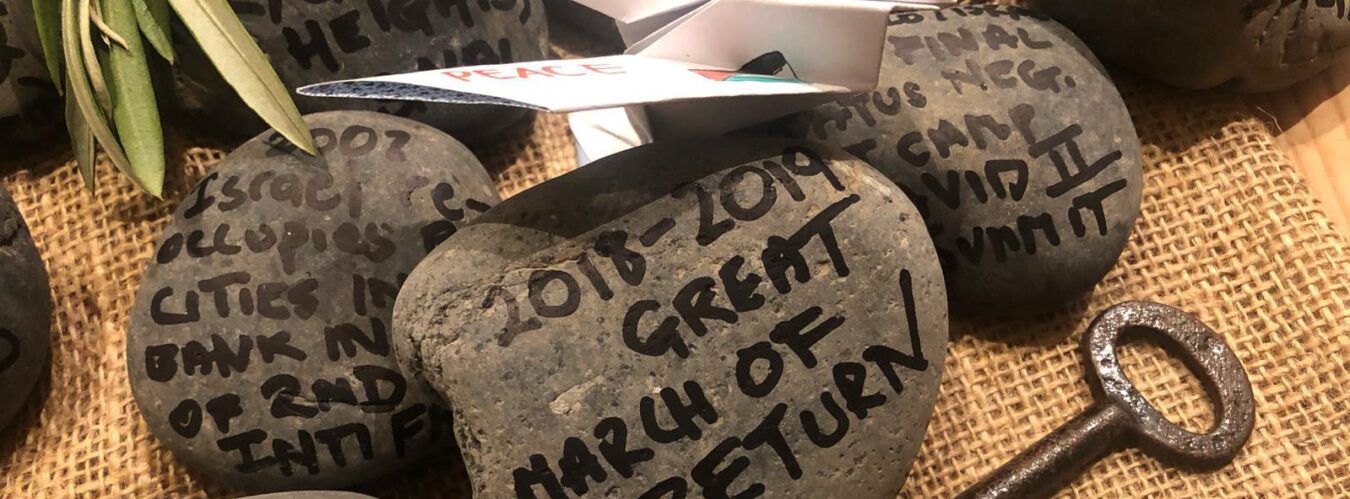
The installation “A Stone’s Throw Away” sheds light on the plight of Palestinian “prisoners”, especially children whose most common “offence” is throwing stones. Like the land itself, their stories are ravaged by forces of genocide. The title alludes to the geographic proximity of Gaza to Israel, heightening tensions, with the Gaza Envelope housing approximately 55,000 Israeli settlers within 7km of the border.
As of early 2026, over 9,000–10,000 Palestinians remain held in Israeli prisons and detention centres, including thousands under administrative detention without charge or trial—a surge since October 2023. Among them are journalists, healthcare workers, and notably children: around 350 Palestinian minors (some as young as 12) are detained, many in facilities like Ofer and Megiddo, facing solitary confinement, beatings, sleep deprivation, and psychological torment.
This installation centres on these children, tried in military courts with near-100% conviction rates, often based on coerced confessions. As Francesca Albanese, UN Special Rapporteur, declared in 2024: “Palestinian children are routinely detained, beaten, and interrogated in Israeli jails for acts as simple as throwing stones—acts of resistance against an illegal occupation that steals their childhood and their future.”
Cases like Ahmad Manasra (arrested at 13 in 2015, years in isolation) and others exemplify this injustice, designed to break young spirits.
This systematic detention directly contributes to scholasticide – the deliberate destruction of the Palestinian education system. As defined by UN independent human rights experts (including Francesca Albanese and Farida Shaheed, Special Rapporteur on the right to education) in their April 2024 statement: “The term scholasticide refers to the systemic obliteration of education through the – arrest, detention or killing – of teachers, students and staff, and the destruction of educational infrastructure.”
In Gaza, nearly all schools and universities have been damaged or destroyed, denying education to hundreds of thousands of children. Across territories, detaining children—often en route to school or for resistance acts—disrupts learning, causes trauma and dropouts, and erodes academic progress, ensuring generational denial of knowledge and future-building amid efforts to erase Palestinian resilience.
These children belong not in cages but on skateboards, riding free parks and streets. Introduced to Gaza in the 2010s by the Gaza Skate Club and UN programs, skateboarding offers joy, therapy, and resilience for a population over half under 18—amid blockade, rubble, and educational devastation.
Enough is enough!
“A Stone’s Throw Away” calls for a world where stones build houses, schools and hospitals, Palestinian youth escape detention’s shadow, and children can simply be children—learning, playing, and thriving on skateboards rather than enduring intertwined imprisonment and scholasticide.
Christine Dawson
2026